
22 Days Uganda Birding Safari
2 Days Mabamba Birding Tour
17 Days Uganda Birding Safari
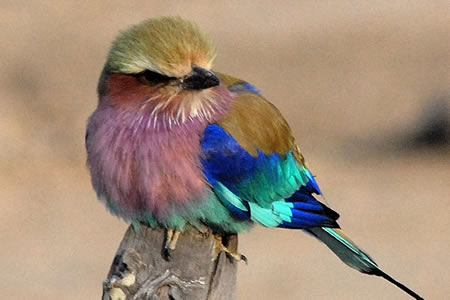
4 Days Birding in Murchison
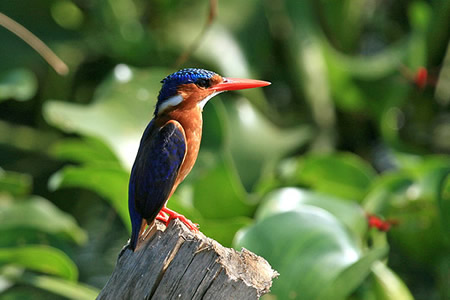
7 Days Uganda Birding Safari
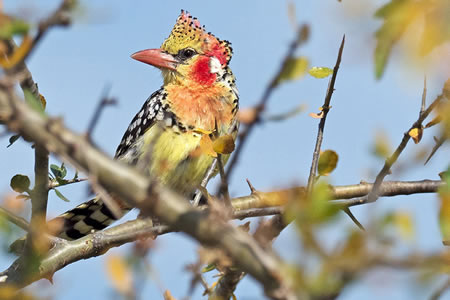
10 Days Uganda Birding Safari
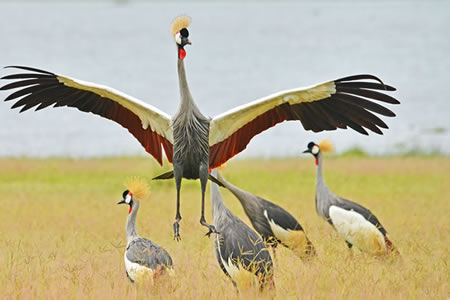
3 Days Birding in L Mburo
12 Days Uganda Birding Safari
15 Days Uganda Birding Safari
Uganda Birding Safari Guide
Let your guide Paul Tamwenya and his team take your through Uganda and a birding paradise: Birding in Africa – especially Uganda and the neighboring countries for about three weeks with a keen and a trained professional birding guide from African Birding Journeys in the diverse ecosystems and habitats, packed into a fairly small area approximately 90,041 square miles, is incomparable to any birding destination almost in the whole world as in days, given a good timing, luck perseverance, weather and openness of the birding group, my proven experience for the last over 15 years we always record over 500 bird species with keen birders I have guided around from all over the world, in his own words, one of my British birding counterpart, Peter Roberts attested that “there are few destinations on earth where one can mop up all these bird species in just 21 days!”
Birding habitats in Uganda
Unlike other birding destinations around the world, Uganda has and is gifted with different habitats that range from tropical to afro-montane rain forests, wooded and grassland savannahs, mashes to papyrus swamps, arid to semi-arid areas not leaving out the clear blue skies all these making Uganda a convention or a melting pot of different resident and migratory species of birds, which include wintering Palearctic migrants like the Peregrine Falcon, Lesser Spotted Eagle, Intra African migrants both vertical and horizontal and the breeding resident species within the main habitats which bring Uganda to the apex of birding all finding refuge in the forests and swamps both high altitude and low range, where many rarities are always found.
Special Bird Species in Uganda
Strange to note is that while Uganda has only one endemic bird species the dark backed Fox’s Weaver found in the mashes of Eastern Uganda near Lakes Opeta and Bisina plus the Awoja swamp and recently on one of my discovery trips with my German friend Konrad as we drove from Mount Elgon National Park, we found a pair nesting near Bulambuli a few kilometers from the main road off Mbale Kapchorwa and several other nests within Pian Upe game reserve, other birding guides have seen it in this area and to the best of my knowledge it is mostly breeding in the months of January, February and Match, important to note it that this Weaver is very similar to the Speke’s which inhabits central Northern Tanzania, South western Kenya and northern Kenya. As a birding destination, Uganda has several easily seen bird species which are endemic to specific habitat within the Albertine Rift that puts Uganda on the birding map of the world as this area is characterized by high altitude lakes and swamps, mountains and tropical rain forests, stretching from the south of Lake Albert way down through the South Western corner linking to Mgahinga Gorilla National Park and connecting to the Nyungwe forest of Rwanda.
Albertine Rift Endemics in Uganda
 This is an adrenaline birding area with unique bird species within, Semilki National Park which has the only Guinea Congo Biome endemics in Central East Africa, Rwenzori Mountains National Park, part of Queen Elizabeth the second largest in Uganda with a corridor to Kibale forest, Bwindi Impenetrable Forest bordered with very productive birding forests like the Echuya forest reserve and eventually Mgahinga gorilla National Park. To mention some of the bird species endemic here are that beautiful leafy African Green Broadbill marked with a pale blue throat and always highly sought after by birders of all walks who visit Uganda, the typical leaf Red-faced Woodland Warbler with an un mistaken brick-faced wash to the supercilium, the very shy and species with no close relatives on the African continent – Neumann’s Warbler with its olive flanks and whitish belly always sighted along the fast forest flowing rivers within the Buhoma section of Bwindi, the Grauer’s Swamp Warbler that inhabits swamps that range between 1950 – 2600 meters above sea level, the dark slaty grey Yellow-eyed Black Flycatcher, the creepy Strange Weaver, the largest Shelley’s Crimsonwing whose sighting I were lucky to have recently with twitcher Henk from the Netherlands around the neck of the Mgahinga gorge, the dark grey and reddish plumaged Dusky Crimsonwing, easily seen crossing back and forth around the Mgahinga gorge and a shy hard find in the Ruhija part of Bwindi mostly on the walk to the swamp many a times if driving slowly it can be seen making swift crosses of the main road about 3 kilometers to the park offices of Ruhija, the iridescent dark Rwenzori Blue Headed Sunbird, the Regal Sunbird easily seen in the highland forests including edges and clearings, the superb painted Rwenzori Turaco easily seen on the Rwenzori mountains and Mgahinga as well, Rwenzori Double-collared Sunbird and the unique Purple-breasted Sunbird that shines an amazing variation of violet, gold, purple, copper and green colorations, the Handsome Francolin pairs and small flocks easily seen on the drive between the Ndego and Ruhija gate of Bwindi along the bamboo thickets, Black Faced Apalis, the Rwenzori Batis which inhabits undergrowth within high altitude forests, Kivu Ground Thrush, the orange brown rather dull melodious Archer’s Robin-Chat easy to see in Mgahinga than in Bwindi where its mostly heard than seen, the Stripe-breasted Tit with soft and muffled tit-like calls, the Collared Apalis among others to be combined up with visiting wonderful parks, including Kidepo Valley that best describes Africa’s wilderness truth, Murchison Falls, Semliki with a variety of Hornbills, Greenbuls, Bluebills with Malimbes and Lake Mburo popular for the Red-faced, Crested, Black-collared, White-headed and Spot-flanked Barbets not leaving out the Livingstone’s Turaco recently sighted around the fig trees near the Rwakobo Rock lodge, with their less visited reserves and Important Birding Areas to maximize on the species of birds while encountering numerous numbers of large game.
Birding Habitats in Uganda
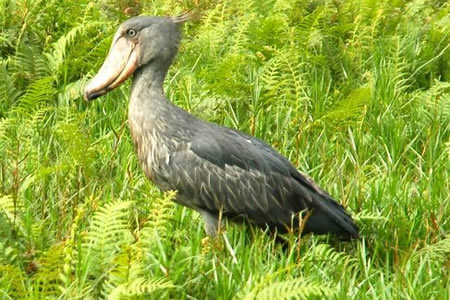
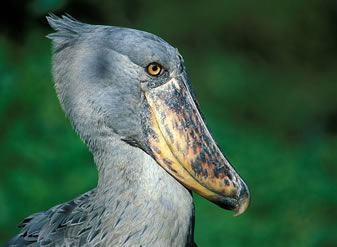
In the papyrus swamps and mashes that punctuate Uganda’s inlands, the puzzling giant stork-like grey Shoebill, a globally threatened bird species and highly sought after can easily be found mostly in the Mabamba swamps and Namugabo wetland near the capital, also great habitats for the Shoebill on Lake Albert, Lake Bisina, Opeta, Awoja wetland, the Victoria Nile and some mashes in eastern central Uganda, as well as mash birds including the widespread but generally scarce and local Lesser Jacana, the charcoal grey Rufous Bellied Heron, Crakes, Moorhens, Ducks, Sandpipers, Shanks, Plovers, Stilts, Papyrus Canary and Yellow Warbler, the large and plain dark brown White-winged Warbler, Carruther’s Cisticola, the locally common but shy, difficult to observe Papyrus Gonolek, and grey eyed Orange Weaver always sighted on the northern shores of Lake Victoria among other species that can be found on a single birding safari in Uganda.
Most of the above make Uganda a must visit birding destination and in a nutshell it is arguably the best country in Africa and perhaps the whole world for a birding safari, with over 1000 bird species recorded in an area to the size of great Britain or the State of Oregon!
Best times to do a birding safari in Uganda
Depending on your interest, you can do a bird watching trip to Uganda any time of the year, but to keep you aware, there are Intra African migrants which are vertical from southern Africa where early arrivals are in Uganda starting July through August to September among which are numerous cuckoos such as the low level foraging but canopy calling Barred Long-tailed Cuckoo which spends most of the summer in the southern countries of Malawi and Mozambique, the glossy Vulnerable and globally threatened Blue Swallow, which breeds in high altitude grasslands of South Africa, Southern Tanzania, Zimbabwe, Malawi among other countries.
 Some of the highly sought after birds in Uganda can easily be seen starting June through September but July and August being the epic birding months. Among which we have the extremely localized Grauer’s Broadbill, which nests starting late May at this time of the year, in 2022 our birding site guide Amos has reported a nest already in January which could change the trend. Mubwindi Swamp in Bwindi Impenetrable National Park is the place we look for this incredible bird and can easily be seen when nesting, otherwise, with the help of our experience and expertise the highly pitched hissing and rhythmical call helps us locate the African Green Broadbill at times in mixed flocks as they glean for insects. The stunning Green-breasted Pitta whose hunt starts as early as 6:00 to get it while still making the displaying call can also be reliably found the same time of year, much as it mostly displays between 6:15am and 7:15am, I have sometimes heard it around 10:45am mostly in the months of March and April.
Much as the above seem the best months for birding in Uganda, December, January and February are generally good months to as it is dry and trees are shading off leaves to offer easy sightings for some high canopy dwelling species like the small rare Ituri Batis, the constantly moving while calling Uganda Woodland Warbler among others, this is also one of the best times for Uganda’s only endemic species the Fox’s Weaver and good to visit the kidepo Valley National for the Stone Partridges, the spectacular huge and massive ivory billed Black-breasted Barbet, Hartlaub’s, Buff Crested and White-bellied Bustards, the very localized and endemic East African Karamoja Apalis, the visiting Grasshopper Buzzard from the northern tropics is around this time of the year together with the nomadic and gregarious Abdim’s Stork among others.
What to bring on a birding trip to Uganda
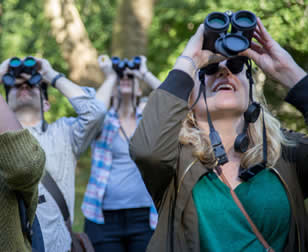 Choosing Uganda as your birding destination is a big decision that should highly impact on the experience you will gain, adding up the travel fair, time and other expenditures, there needs to be great preparation, psychologically, physically and financially to have this Uganda birding trip create everlasting memories, thus given that our birding safaris in Uganda are conducted in remote rural areas and mostly enjoyed in forests on foot, mashes in canoes or small boats and rarely within towns where birding gears may not be in reach and thus the reason to prepare and pack all the essentials to enhance the experience. Therefore, this article brings you an inclusive list of fundamentals for a great and memorable bird watching safari to Uganda.
Right clothing
Birding in Uganda just like other tourist activities require participants to pack specific cloths for your convenience and memorable experience. The appropriate dressing for birding safaris in Uganda include light-weight long sleeved shirts and pants which are nature friendly. 3/4 pairs of quick drying long pants, 3/4 quick drying long sleeved shirts, 2 short sleeved shirts/ t-shirts, 2 pairs shorts/capris, 1 sleeveless shirt, Fleece pullover or light jacket, Rain jacket and rain pants, 4 pairs mid-calf socks (long enough to tuck pants into), A wide-brimmed hat is handy for protecting your head from the scotching sunshine in the tropics you are likely to experience on the day long walks and on open boats among others
Waterproof shoes/hiking boots.
To maximize and increase on the bird sightings in Uganda, you will be involved into long and short walks through the different habitats where bird species can easily be seen, ranging from wetlands, forests to savannah plains that will definitely need good walking shoes, Rain boots or gum boots for birding in boggy destinations like Semliki, on rainy days, birding to the Mubwindi Swamp needs really good waterproof boots.
Field bag
As you bird in Uganda, you will always need a water proof backpack for carrying your birding essentials such as cameras, Spare batteries, binoculars packed lunches, laser pointers, Playbacks, Insect repellants, sun creams and many others at all times during birding in the multi habitats of Uganda.
Field guidebooks
These are very crucial item to come along with for your next birding safari to Uganda which will entirely depend on the number of you birding days. We have a few stores and bookshops that do dell them, our safari guides have a couple of guide books in the vehicles you will be in, make best use of them, but key among the books we recommend are; Terry Stevenson and John Fanshawe. A Field Guide to the Birds of East Africa: Kenya, Tanzania, Uganda, Rwanda and Burundi. Birds of Africa, South of the Sahara by Ian Sinclair and Peter Ryan, Bradt Uganda Travel Guide by Philip Briggs and Andrew Roberts will be very helpful as it has lots of details about tourism and all it takes.
The Safari Companion – A Guide to Watching African Mammals by Richard D Estes. illustrated by Daniel Otte, (Russell Friedman Books, JHB 1993) This book has been described as the tool to make us all instant experts in animal behavior, and it should quickly assert itself as the principal reference on animal behavior for game rangers, safari guides and nature lovers. The book will enable Uganda safari-goers to recognize and understand interesting behavioral displays such as courtship rituals, territorial marking, aggression and care of young. Only recommended for serious naturalists, as the book is heavy on detail, much of it presented in ‘hard -to-digest’ scientific format, with frequent use of symbols and icons.
With digitalization, you can actually download the guidebook to avoid carrying bulky things.
Medication and First aid kit
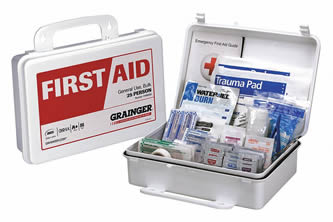 Participation on a safari or tour to Africa/ Uganda requires that you be in generally good health. All guests must understand that while a high level of fitness is not required, a measure of physical activity is involved in all African safaris and tours and note that while birding in Uganda’s country side, there will be limited access to good hospitals services, pharmacies and doctors, for the few weeks you will be in Uganda, please carry a long a small kit that should contain lip balm with sunscreen, sunscreen, whistle, Aspirin, Ibuprofen, band aids/plasters, tape, anti-histamines, antibacterial gel/wipes, antiseptic cream, Imodium or similar tablets for mild cases of diarrhea, rehydration powder, insect repellent, sewing kit, extra prescription drugs you may be taking as per your doctor’s recommendation, Iodine and hydrogen peroxide for minor injuries among others.
Cameras to bring on a birding trip to Uganda
I am not so good at cameras but I have been in great company of photographer’s ears dropping on their chats if you’re a fanatic you will need different cameras and lenses for different habitats and species. One with extra batteries, memory cards easy camera accessories is crucial for birding in Uganda, Nikon, Canon and Sony are very user friendly and common. Imagine that moment when the shoebill is about to take off or catch the lung fish its favorite dish! What a million dolor shot you will capture! Other moments are when the Green Breasted Pitta is displaying, chimpanzees grooming, hippos yawning, giraffes necking, to mention but a few. Make sure that the camera chosen is a perfect blend of capability, weight and portability with a super zoom that can neutralize high to low-light places.
Pair of binoculars and spotting scope
Uganda has from the largest ostrich 2.5 meters high to smallest 8cm tits which makes them really tiny to be easily spotted at a distance but with your binoculars in possession, you will be able to capture every moment during your birding safari in Uganda. Swarovski, Zeiss, Leica, Branton are good examples, some birders even go an extra mile to bring 2 pairs of binoculars incase the main one pair is damaged in due course of the trip. Telescopes are very good aiders to great views into detail of some forest species as they spell out all the details of a particular species, I always see scopes make a birding trip to Uganda easy and enjoyable if you are swift to land it on the bird.
Water bottle
Uganda is an equatorial country and generally warm, so as you come for your birding trip, don’t forget to pack a water bottle to always keep you hydrated during the trip, at Birding Journeys Uganda we recommend 1 – 2 liters of water everyday which is provided in the cars. Since birding mostly involves having nature walks and runs that are usually physically demanding hence the need to have drinking water at all times.
Flashlight
Flashlight is very important for late evening drives and planned walks to spot the nocturnal species of birds mostly the Owls and Nightjars not leaving out predators like Leopard, Genet cats, Hyenas and Lions.
Documents:
Passport (with copies), Travel insurance policy (with copies), required visa application pre-approval (obtain online; see visa information), Flight itinerary (with copies), Yellow fever vaccination proof (with copies)
Toiletries
Along the usual essentials such as clothing, shoes and camera, other items such as lotion, tooth paste, toothbrush, hand sanitizer and hair gels are also important during your birding safari in Uganda.
Birding Journeys trips are generally for all walks of birders and naturalists as most of our guides are young, passionate and energetic to handle and lead both experienced and inexperienced guests. You don’t need to be an expert or a super-ticker to enjoy yourself in company of our team. Our tours are designed for enthusiastic travelers who enjoy spending most, if not all, of their holiday time exploring nature. Our goal is to get birders to the world’s most amazing places, seeing the world’s most amazing birds, in as much comfort as possible since we take time to choose real and wonderful destinations, with excellent guides who later create everlasting memories!
Our Uganda birding trips range from one day excursions to hard core birding trips up to 4 weeks mostly in Uganda and Rwanda, just let us know, and we shall offer exactly what you want!!